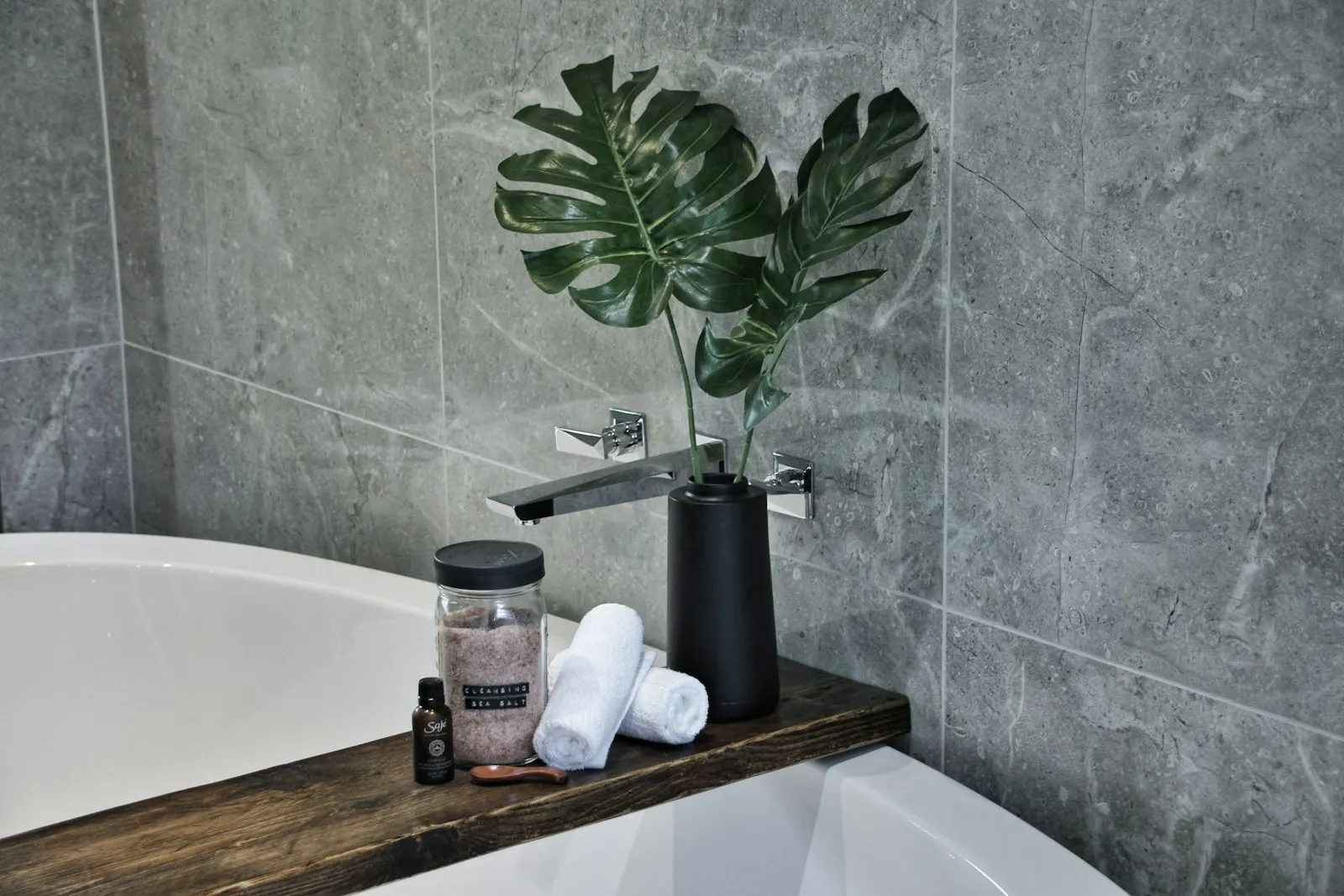
Silicone is the soft seal between tiles and baths, basins and benchtops, shower bases and walls. When it is new, it keeps water where it belongs. Over time it goes black with mould, peels away from the surface or splits, and water starts to get behind tiles and into walls and floors. In a damp climate like South Gippsland’s, bathroom silicone does not last forever.
Leongatha Handyman removes old silicone and reseals showers, baths, vanities, kitchens and laundries in homes across Leongatha, Korumburra, Mirboo North, Meeniyan, Inverloch and nearby towns. We also caulk gaps around trims, skirting, windows and doors.
Why you cannot just silicone over the top
Fresh silicone does not bond properly to old silicone, and mould underneath keeps growing and shows through. The only lasting fix is to remove the old silicone completely, clean and treat the surface, let it dry, then apply fresh silicone.
Our resealing process
1. Remove. Old silicone is cut and scraped out completely, including residue.
2. Clean. Joints are cleaned with a solvent and mould treatment.
3. Dry. The joint must be completely dry. In a shower that has been used recently, this can take time, so we may ask you not to use it beforehand.
4. Mask. We tape both sides of the joint for a clean, straight line where needed.
5. Apply. We use a quality sanitary silicone with mould inhibitor, tooled to a smooth, concave finish.
6. Cure. The silicone needs time to cure before it gets wet, usually 24 hours. We will tell you when the shower can be used.
Why silicone fails faster in South Gippsland homes
Leongatha sits in rolling dairy country with long, damp winters and plenty of grey days between May and October. Bathrooms in older weatherboard homes around Leongatha, Korumburra and Mirboo North often have small windows, no exhaust fan or a fan that vents into the roof space rather than outside. Steam from a hot shower has nowhere to go, condensation sits on tiles and silicone for hours, and the joint between the shower base and the wall stays wet for most of the day. That is exactly the environment black mould loves.
On the coast at Inverloch, Venus Bay and Tarwin Lower the problem is a little different. Holiday houses are often shut up for weeks at a time, so moisture is trapped inside with no airflow at all. Owners arrive for the long weekend to find the silicone around the bath and the kitchen sink spotted with mould that was not there at Easter. Salt air also attacks cheap silicone around external windows and doors, so the seals crack and shrink sooner than they would inland.
Knowing why a joint failed helps us choose the right product and gives you a better chance of the new seal lasting. Where we see a ventilation problem, we will point it out so you can decide whether to have an exhaust fan checked or upgraded by a licensed electrician.
Choosing the right sealant for the job
Not every gap needs the same product. Using the wrong one is one of the most common reasons a joint fails within months.
- Neutral-cure sanitary silicone suits showers, baths, basins and laundry tubs. It contains a mould inhibitor, stays flexible and does not smell as strongly of vinegar as acid-cure products.
- Acid-cure silicone can etch some metals and natural stone, so we avoid it around chrome fittings, mirrors and marble.
- Paintable acrylic gap filler is the right choice for cornices, skirting boards, architraves and window trims that will be painted. Silicone cannot be painted over.
- Polyurethane and hybrid sealants are tougher and better for external joints, around window frames, between brick and timber, and on steps or thresholds that move.
- Fire-rated sealant is a specialist product for penetrations through fire-rated walls. If your property needs this, we will tell you and it may need a licensed trade.
We match colour as closely as possible to your grout, benchtop or trim. White, translucent, grey and a range of off-whites cover most bathrooms and kitchens.
Signs your seals need attention
You do not need to wait for a leak. Look for:
- black or pink spots that will not wipe off the silicone
- silicone lifting at one edge, or a gap you can slide a fingernail into
- grout cracking along the bottom row of tiles in a shower
- a musty smell in a bathroom that is otherwise clean
- swollen or bubbling paint on the wall outside the shower
- skirting boards or vanity kickboards that are soft, stained or swelling
- tiles that sound hollow when tapped near the shower base
The last three can mean water has already been getting past the seal for some time. We can reseal the joints, but if the waterproofing membrane under the tiles has failed, resealing is a temporary measure. We will tell you honestly what we see, and if the problem is beyond silicone we will recommend a licensed waterproofer or plumber.
Kitchens, laundries and benchtops
Kitchen silicone takes a beating from hot water, detergent and cleaning. Around the sink, along the back of the benchtop where it meets the splashback, and around cooktop edges, old silicone yellows and lifts. Water then gets into the particleboard underneath the benchtop and it swells, which is far more expensive to fix than a reseal.
In laundries we reseal around troughs, between the trough cabinet and the wall, and along the bench where the washing machine sits beside it. In many South Gippsland farmhouses the laundry doubles as the mudroom where work boots and wet coats come in, so these joints work harder than most.
Windows, doors and the outside of the house
Gaps around window and door frames let in draughts and, in heavy southerly rain, water. Weatherboard homes in Korumburra, Poowong and Loch sit high on exposed ridges and take the full force of winter weather, so external seals matter. We seal between frames and cladding, around external wall penetrations, and along thresholds where appropriate.
Inside, we fill gaps between architraves and walls, along skirting boards and at cornice joints before painting. This is cosmetic work but it makes a big difference to how a freshly painted room looks, and it cuts down on draughts around older frames.
Looking after new silicone
A few simple habits make a fresh reseal last longer:
1. Keep water off the new joint for the full curing time we give you.
2. Run the exhaust fan or open a window during and after every shower.
3. Squeegee or wipe down shower walls and the base after use.
4. Clean with a mild bathroom cleaner. Avoid scrubbing silicone with abrasive pads.
5. Check the joints every few months and treat any early mould spots with a mould remover.
Combining resealing with other jobs
Resealing pairs well with regrouting, replacing a loose towel rail or toilet roll holder, fitting a new shower screen seal or swapping tired tapware handles that do not need a plumber. Booking a few bathroom jobs together means one visit and less disruption. We can also caulk and touch up paint in the same room so it looks finished when we leave.
What a typical reseal visit looks like
Most resealing jobs fit into a single visit. We start by looking at every joint in the room, not just the one you mentioned, because a shower that has gone black along the base often has hairline gaps at the vertical corners too. We check for loose tiles, drummy sounds and soft spots, and we tell you what we find before we start cutting anything out.
Then the old silicone comes out. This is the slow part and the most important. We use plastic and steel scrapers, specialist silicone remover where residue is stubborn, and a blade held flat to the surface so we do not scratch acrylic baths or shower bases. Mould stains that have gone deep into the grout next to the joint are treated, and the area is left to dry. In a cold Leongatha bathroom in July this can take longer, so we sometimes use a fan or heater to help.
Once dry, the joint is masked where needed, the silicone is applied in one continuous bead and tooled smooth, and the tape comes off before the skin forms. You get a neat, even line with no smears on the tiles. We leave you with written curing time and simple care tips, and we take the old silicone and rubbish away.
Ensuites, powder rooms and older bathrooms
Older homes in Korumburra and Leongatha sometimes have cast-iron or pressed-steel baths set into tiled hobs, with decades of paint, grout and silicone layered on the joint. These need patience to strip back cleanly. Newer homes in estates on the edge of town usually have acrylic shower bases and semi-frameless screens, where the joint between the screen channel and the base is a common leak point. Both are routine for us.
Where we reseal
- Shower bases and wall joints
- Shower screens
- Baths, around the rim and at the wall joints
- Vanity basins and tops
- Kitchen sinks and benchtops against splashbacks
- Laundry tubs
- Toilet bases, where appropriate
- Internal corners of tiled walls
Caulking around the house
Caulking is the painter’s version of silicone: a paintable flexible filler used to seal gaps. We use it for:
- Gaps between skirting boards and walls
- Gaps around architraves and window frames
- Cracks along cornices
- Exterior gaps around window frames and trims (with exterior-grade products)
Sealing gaps also helps with draughts, which matters in older houses through a South Gippsland winter.
Leaking showers
If water is escaping a shower, failed silicone is often the reason, but not always. Cracked grout, failed waterproofing under the tiles or a leaking pipe can also be responsible. We will reseal and regrout where needed. If signs suggest the waterproofing membrane has failed, such as tiles lifting, persistent damp in the next room or rotting floor timbers, we will recommend a specialist.
Where we work
Leongatha, Korumburra, Mirboo North, Meeniyan, Koonwarra, Dumbalk, Inverloch, Tarwin Lower, Nyora, Loch, Poowong and surrounding areas.
Frequently asked questions
How long until I can use my shower?
Usually 24 hours after resealing. We will give you the specific curing time for the product used.
Will the mould come back?
Ventilation makes the biggest difference. Mould-resistant silicone and good airflow help keep it away for longer.
Can you fix a leaking shower?
We reseal and regrout. If the waterproofing under the tiles has failed, a waterproofing specialist is needed.
Can you reseal a shower that is still leaking through the floor?
We can replace the silicone, which often stops leaks at the joints. If water is getting through a failed membrane under the tiles, you will need a licensed waterproofer, and we will tell you if that is what we see.
Do you seal around windows on the outside of the house?
Yes. We use an exterior-grade sealant suited to the frame and cladding and remove old cracked sealant first where possible.
Get a free quote
Tell us your town and list each job on its own line. Add photos if you can. We reply by email with an itemised quote, free and with no obligation.
Get a free quote